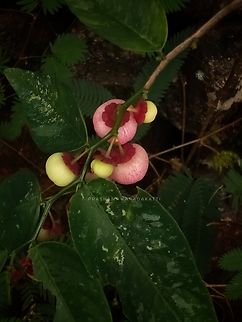
Appearance
It is a shrub with multiple upright stems, reaching up to 2.5 m tall and bearing dark green oval leaves about 5–6 cm long.Naming
* In Chinese, it is called "mani cai"⤷ In Filipino, it is called "Chinese malunggay"
⤷ In Indonesian, it is called
⤷ In Japanese, it is called "amame shiba"
⤷ In Javanese, it is called
⤷ In Tamil, it is called "Thavasi Keerai"
⤷ In Telugu, it is called "chakramuni aaku"
⤷ In Malayalam, it is called "Madhura cheera" or "Singapura cheera"
⤷ In Sinhalese, it is called "Singapore leaves or Japan Batu "
⤷ In Malay, it is called "cekur manis", or "asin-asin" and "cangkok manis"
⤷ In Sundanese, it is called
⤷ In Thai, it is called "pak waan"
⤷ In Vietnamese, it is called "rau ngót"
Distribution
It is native to India, Bangladesh, southern China and Southeast Asia. It inhabits tropical and subtropical humid lowland forests, where it grows on brushy slopes and sunny forest margins from 100 to 400 m elevation.Freshly picked leaves contain high levels of provitamin A carotenoids, and also contain high levels of vitamins B and C, protein and minerals.
One study has suggested that excessive consumption of uncooked and juiced katuk leaves can cause lung damage due to its high concentrations of the alkaloid papaverine.
Habitat
It is native to India, Bangladesh, southern China and Southeast Asia. It inhabits tropical and subtropical humid lowland forests, where it grows on brushy slopes and sunny forest margins from 100 to 400 m elevation.Freshly picked leaves contain high levels of provitamin A carotenoids, and also contain high levels of vitamins B and C, protein and minerals.
One study has suggested that excessive consumption of uncooked and juiced katuk leaves can cause lung damage due to its high concentrations of the alkaloid papaverine.
Uses
Various studies have confirmed that this plant has notable phytochemical constituents and various pharmacological activities including antioxidant, anti-inflammatory, and anti-obesity activities.Although the exact cause is unknown, an association with bronchiolitis obliterans and the consumption of large quantities of uncooked leaves or raw juice leading to lung failure has been reported.
Cultural
It is one of the most popular leafy vegetables in South and Southeast Asia and is notable for high yields and palatability. It can be cultivated specifically for edible asparagus-like stems using heavy fertilization, this cultivation variant is known as "Sabah vegetable." The stems are otherwise not edible.References:
Some text fragments are auto parsed from Wikipedia.
