No species identified
The species on this photo is not identified yet. When signed in, you can identify species on photos that you uploaded. If you have earned the social image editing capability, you can also identify species on photos uploaded by others.

By Ferdy Christant
All rights reserved
Uploaded Mar 29, 2020. Captured Oct 12, 2019 15:41.

comments (14)
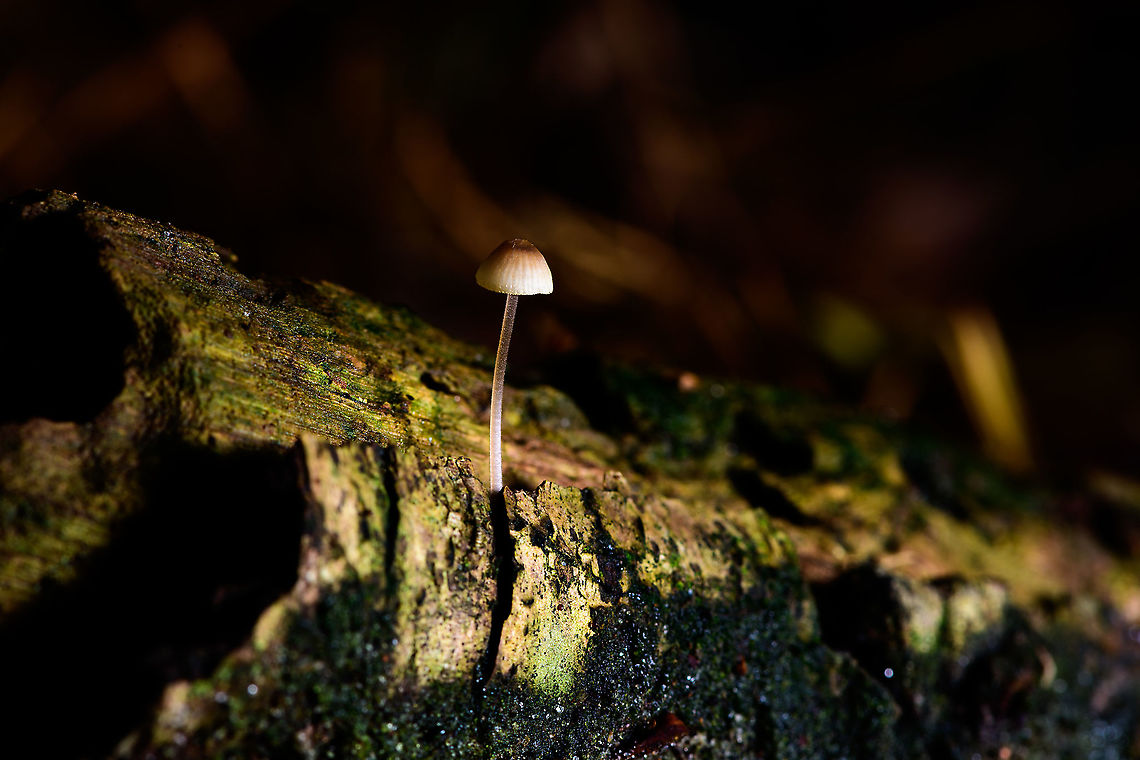
First, without flash, underexpose so much that the image basically is all black. Put your camera in M mode. Pick the lowest ISO your camera supports and keep raising the shutter speed until the image is all black. You've now shutdown all natural light in the scene.
Which means you now have full control of whichever light you want to add. A single light source with diffuser is a good starting point. As for distance and direction, just experiment, every subject is different.
The great bonus of this technique is that you can use the lowest possible ISO (so no noise at all) as well as a fast shutter speed (no blur from movement).
Note that this image has a low ISO yet not a fast shutter speed. Instead, I used a small aperture (f/18). This is the 2nd way to underexpose with added bonus that you get lots of depth of field.
I must warn you that this technique is lots of fun and quite addictive. You've been warned. Posted 5 years ago
1. Disable or remove flash on your camera.
2. Put camera in M mode.
3. Put ISO at lowest value (usually 100)
4. Set aperture to desired value based on depth of field, but for this test it doesn't matter much, probably use f/5.6, f8 or f11.
5. The only remaining parameter is shutter speed. I don't know at which value you currently have it, so take a shot
6. Check LCD. If there's still light in the scene, double the shutter speed. For example from 1/200s to 1/400s.
7. Take another shot. Repeat this process of increasing the shutter speed until the image is entirely black. Congrats, you removed all light!
That was the technical part. And now we add back light, which is the creative part. Re-enable or add flash on the camera and play with position, distance, diffusers, single or multiple light sources, flash lights, UV lights, reflectors, color filters, the possibilities are endless, really. Posted 5 years ago
And every time in hindsight I thought...that's all? Should have done this earlier.
The technical part is removing light. You already know how to remove light:
- low ISO -> less light
- fast shutter speed -> less light
- small aperture (big f number) -> less light
It's just that you never had to, because usually you do the opposite. Anyway, just try it, allow yourself to fail, ask questions, and you got this. Posted 5 years ago