JungleDragon is a nature and wildlife community for photographers, travellers and anyone who loves nature. We're genuine, free, ad-free and beautiful.

Join

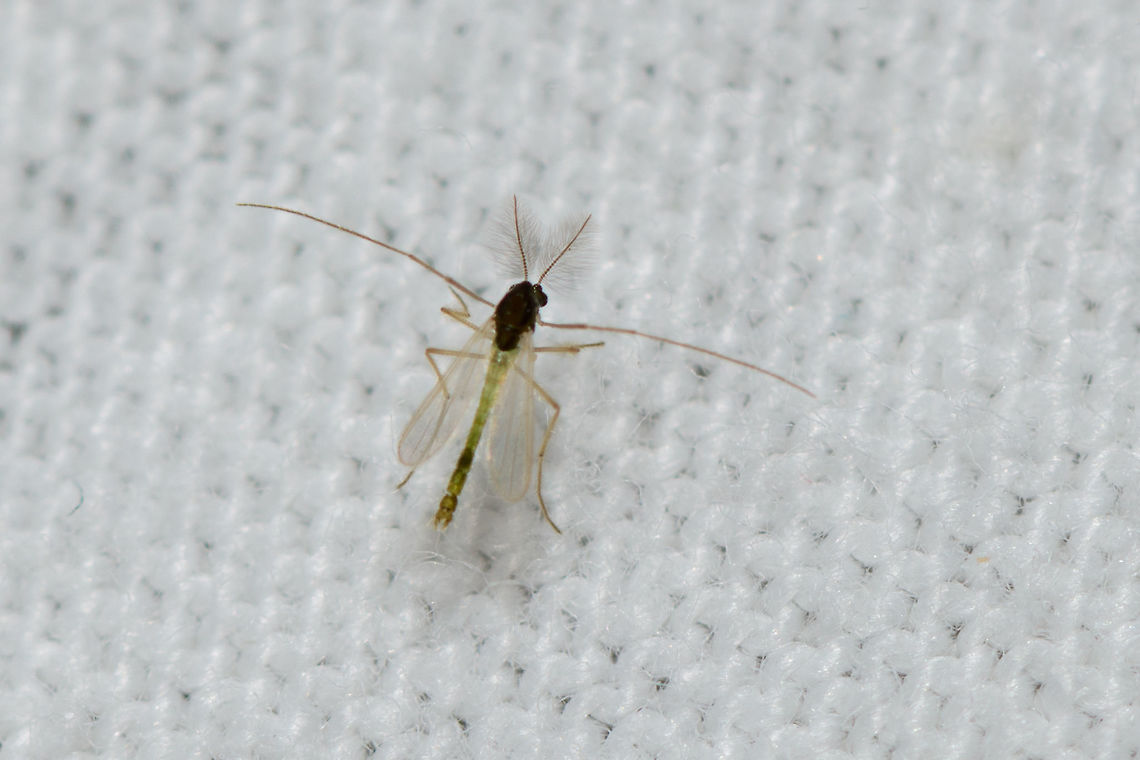
Male midge, Heesch, Netherlands Found last Friday night on the moth light trap. My theory is that its a male mosquito, based on the brushed antennae. Not sure though as I did find a male mosquito that is much larger. This one I'd guess at about 3-5mm only. Europe,Heesch,Netherlands,World Click/tap to enlarge

Male midge, Heesch, Netherlands

Found last Friday night on the moth light trap. My theory is that its a male mosquito, based on the brushed antennae. Not sure though as I did find a male mosquito that is much larger. This one I'd guess at about 3-5mm only.

    comments (8)

  1. It is indeed a male. But, it's not a mosquito. It's a male midge. You can tell because it does not have a proboscis, it's resting low to the surface, the wings are not fringed and don't have scales, the legs have hairs not scales, and the wings are shorter than the abdomen...All of these things distinguish it from a mosquito. Posted 7 years ago
    1. Thanks so much, that's an excellent explanation! Posted 7 years ago
      1. Sure thing :)

        I did a quick google search, and although I couldn't figure out the ID for this midge, there were a ton of pictures of midge fishing lures that had green "bodies" and black "heads", so maybe this is a common species since it's apparently a popular lure?
        Posted 7 years ago
        1. Can you share a few examples, please? Posted 7 years ago
          1. If you scroll down after clicking on this link, you'll see the green midge lure on the left. When I searched google images for "green midge with black thorax", a bunch of images just like the lure in this link popped up. It must be popular, I suppose.

            http://www.mtfa-springfield.org/resources/fly-tying-recipes-patterns/rusty-tubing-midge/
            Posted 7 years ago, modified 7 years ago
            1. Thanks! May be chironomus sp, but I wouldn't dare go beyond that.
              http://www.gardensafari.net/pics/vliegen/muggen/chironomus_sp_hs0_2600.jpg

              By the way, adding some "lost in translation": the dutch language doesn't have separate words for midges and mosquitos, they are all part of a larger group named "muggen", which we typically translate back to english as "mosquitos".
              Posted 7 years ago
              1. Interesting. So, you can call both “muggen”, but also use the English word “mosquito”, but not the word “midge”? So, if someone said “muggen”, you wouldn’t know if it was in reference to a biting fly or a non-biting fly. Posted 7 years ago
                1. Correct. We call both types "muggen". Technically, there is a term "steekmuggen" to specificially mean mosquitos but nobody uses this. So when translating back from muggen to english, a typical dutch person will use "mosquito", because "midge" is not a common word to know in english for non-native speakers. Posted 7 years ago

Sign in or Join in order to comment.

No species identified

The species on this photo is not identified yet. When signed in, you can identify species on photos that you uploaded. If you have earned the social image editing capability, you can also identify species on photos uploaded by others.

View Ferdy Christant's profile

By Ferdy Christant

All rights reserved
Uploaded Jul 24, 2018. Captured Jul 21, 2018 01:59.
  • NIKON D850
  • f/16.0
  • 1/60s
  • ISO64
  • 105mm