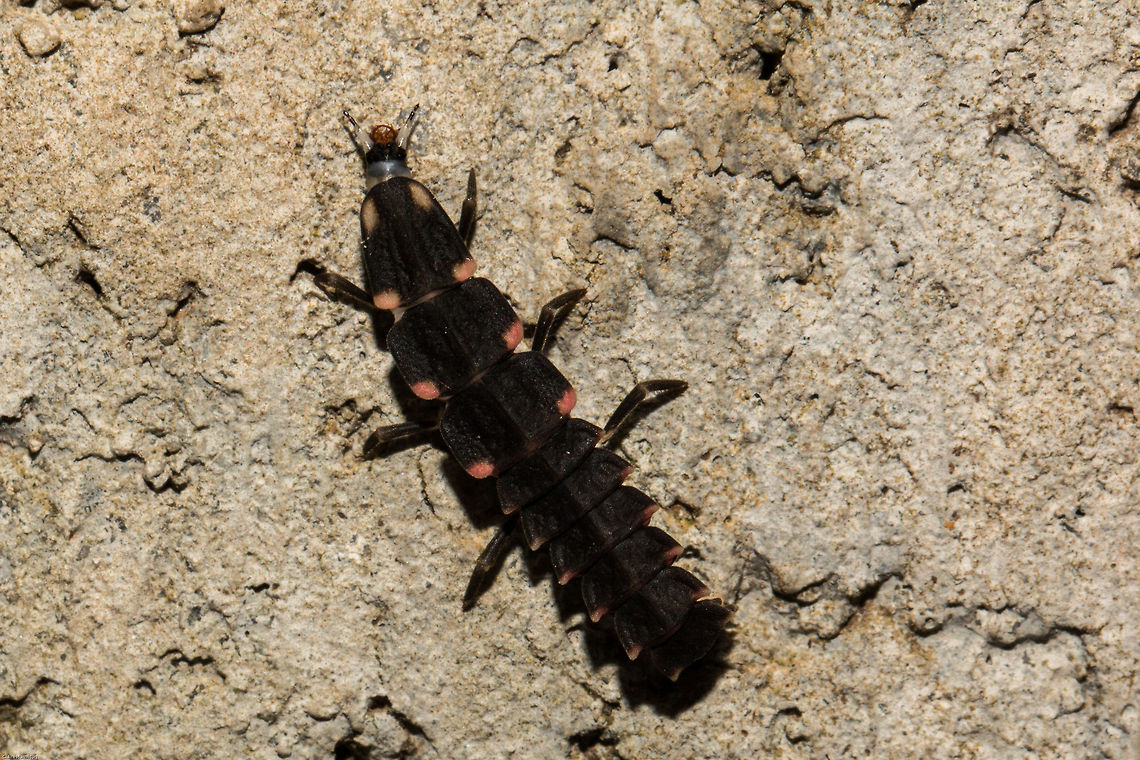
Firefly larva
Unfortunately I cannot get this down to species level as little research has been conducted in Africa on these little critters. The beetles are coloured orange and black and contain canthardin, making them distasteful to predators. Adults are active during the day and are often found on grasses and other plants, sometimes in large numbers, feeding from the nectar of flowers. the larvae live in decaying wood or under loose bark, probably feeding on fungal material.
No species identified
The species on this photo is not identified yet. When signed in, you can identify species on photos that you uploaded. If you have earned the social image editing capability, you can also identify species on photos uploaded by others.

By Claire Hamilton
All rights reserved
Uploaded Dec 30, 2014. Captured Dec 29, 2014 07:55.

comments (3)
I don't have a lot of info on South African fauna but from a quick search online it would seem that there are not too many Lampyridae around (?!?)
This larva looks exactly like the larvae of European Luciola spp and the only Luciola from SthAfr I could find is Luciola tagensis (Ballantyne, 1970). That's not much of an "ID" but if it would indeed be the only Luciola in the country than I would see no harm in naming it so. Do you have resources with South African checklists or some such?
P.S. You may want to edit/update the "description" ;o) Posted 9 years ago, modified 9 years ago