 Species introCountry intro
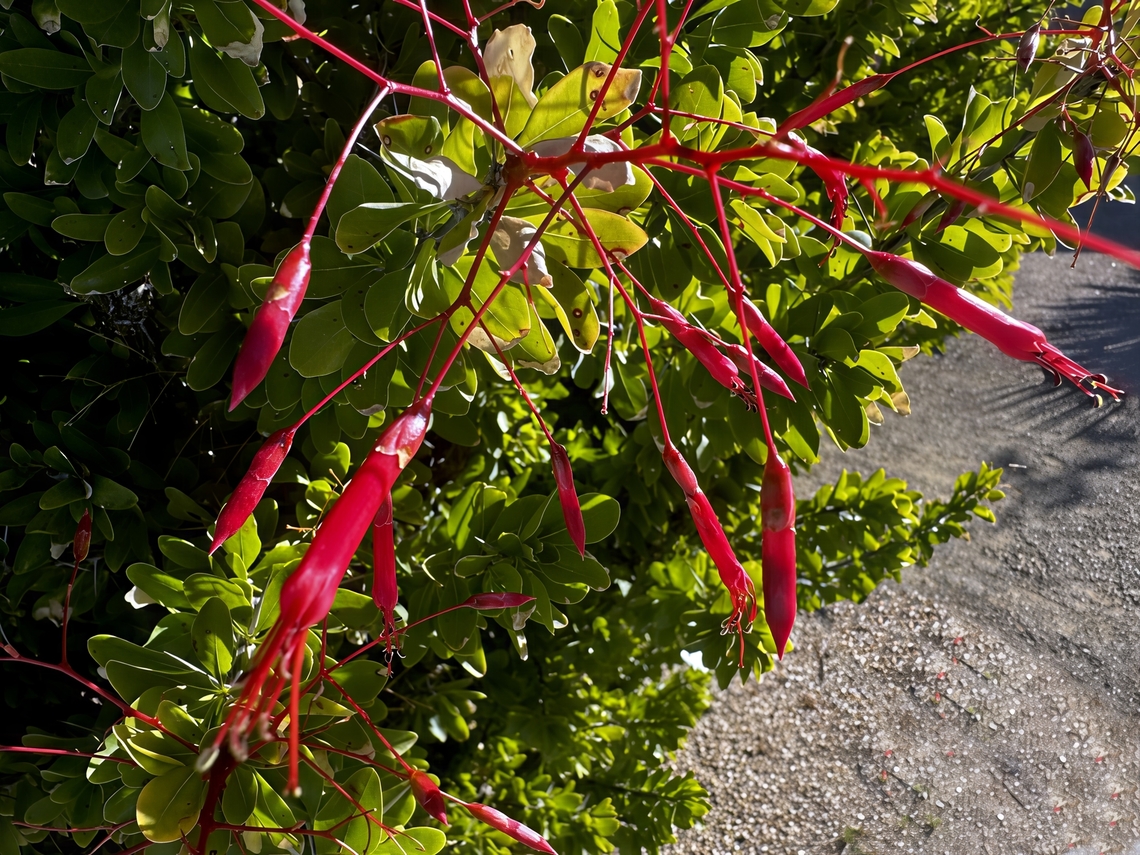
Mexican Tree Ocotillo (Fouquieria macdougalii)
Young, developing shoots and leaves are delicate and lack a fully developed protective waxy layer. The red anthocyanin pigment acts as a natural "sunscreen" or light shield, absorbing excess intense light and UV radiation that could otherwise damage the sensitive new tissues and their developing photosynthetic mechanisms.
Anthocyanins help protect the plant from other abiotic stresses, including cold temperatures and drought, by stabilizing cell membranes and acting as antioxidants.
The vibrant red color may serve as a warning signal to insects and other plant-eating animals that the new growth is tough or unpalatable, potentially indicating the presence of bitter or toxic compounds.
Some research suggests that the presence of anthocyanins during leaf development and senescence (aging) is linked to the efficient recovery and transport of valuable nutrients, like nitrogen and carbohydrates, back to the main plant body for storage.
Fouquieria macdougalii is a ocotillo in the Fouquieria genus.

