 Promoted
Wooly Rhinoceros Senita (Lophocereus schottii)
The plant can grow quite tall in the wild, reaching up to 10-15 feet, and is known for its waxy, ribbed stems.
Flowers and Fruit: It produces nocturnal pinkish-white flowers, which are followed by small, edible red fruits.
The bright red color on the inner, newer spines (areoles) is normal for new growth. These spines typically fade to a white or gray color as they mature and age.
Native to the Sonoran Desert, it is extremely drought-tolerant and thrives in full sun conditions.
The Lophocereus schottii has a unique mutualistic relationship with the senita moth, which is its only nocturnal pollinator.
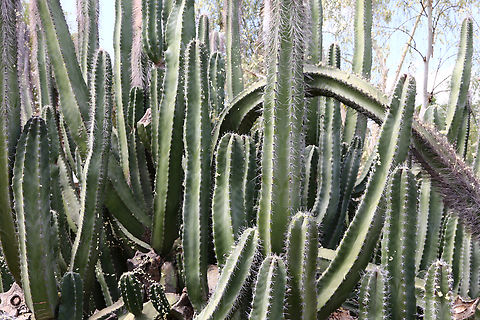
''Pachycereus schottii'', the senita cactus, is a species of cactus from southern Arizona and north-western Mexico, particularly Baja California and Sonora. Synonyms include ''Pilocereus schottii'' and ''Lophocereus schottii''.

